
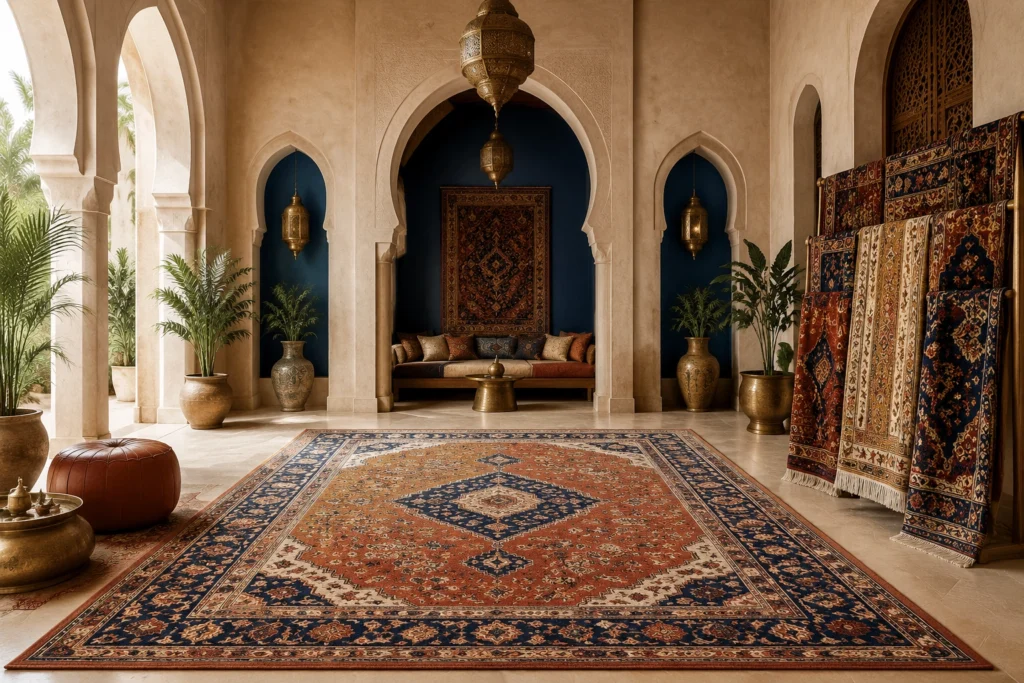
The carpet market across the African continent—particularly in North Africa—represents one of the most dynamic and lucrative target regions for machine-made carpet exporters. Unlike the Arabian Gulf markets, which predominantly emphasize opulent classical luxury, the regional aesthetic here seamlessly merges rich indigenous heritage with contemporary urban functionality. For international importers, distributors, and interior architects sourcing for boutique hotels, large-scale mosques, or luxury residential developments, understanding modern North African carpet design trends is crucial for mitigating inventory risks and driving project profitability. In this strategic guide, we explore the essential facets of this market across design motifs, color schemes, structural materials, and emerging industry directions.
Navigating the market requires a clear understanding of two coexisting design movements: the indigenous movement and the modernist movement.
For professional procurement officers and carpet importers, recognizing that North Africa is not a monolithic market is vital:
Color selection in the region is intimately tied to local climate and visual culture. Earthy neutrals, warm beige, sand, and taupe are established baseline shades that naturally harmonize with warm, sunlit architectural environments. In luxury hospitality projects, strategic accents of Mediterranean blue or muted terracotta add distinctive refinement.
From a technical standpoint, fiber quality and durability are non-negotiable criteria. Given the elevated temperatures and demanding commercial foot traffic, carpets must exhibit superior resistance to abrasion, crushing, and UV-induced fading. As a leading manufacturer and exporter in Kashan, Senobar Carpet addresses these exact technical requirements by combining premium-grade yarn with advanced weaving technology, delivering plush comfort alongside robust structural endurance for high-traffic installations.
The regional carpet sector continues to evolve alongside shifting architectural tastes. Analyzing current North African carpet design trends reveals a steady transition among younger interior designers toward hybrid concepts—blending traditional central medallions and borders with clean geometric accents.
Furthermore, the expansion of boutique hospitality along the coastal belts of Morocco and Tunisia is accelerating demand for custom-sized carpets and bespoke patterns. Equally important is the growing emphasis on product longevity and sustainability. B2B buyers increasingly favor low-maintenance, long-lifecycle products, creating a distinct competitive edge for manufacturers that implement rigorous, multi-stage quality control.
At Senobar Carpet, our manufacturing infrastructure is engineered to bridge traditional artistry with global industrial benchmarks. Our export strategy for North Africa is built on three core pillars:
Succeeding in North Africa requires informed product selection rather than generic sourcing. Understanding evolving North African carpet design trends means distinguishing between the requirements of a coastal villa in Tunis and a luxury development in Cairo. Importers who partner with agile manufacturers capable of delivering both aesthetic flexibility and consistent structural durability will secure the strongest market position.
Reviewing our export-grade catalog is your first step toward optimizing your commercial procurement. For detailed collection inquiries, custom project specifications, or B2B partnership opportunities, the international export team at Senobar Carpet is ready to assist you.
