
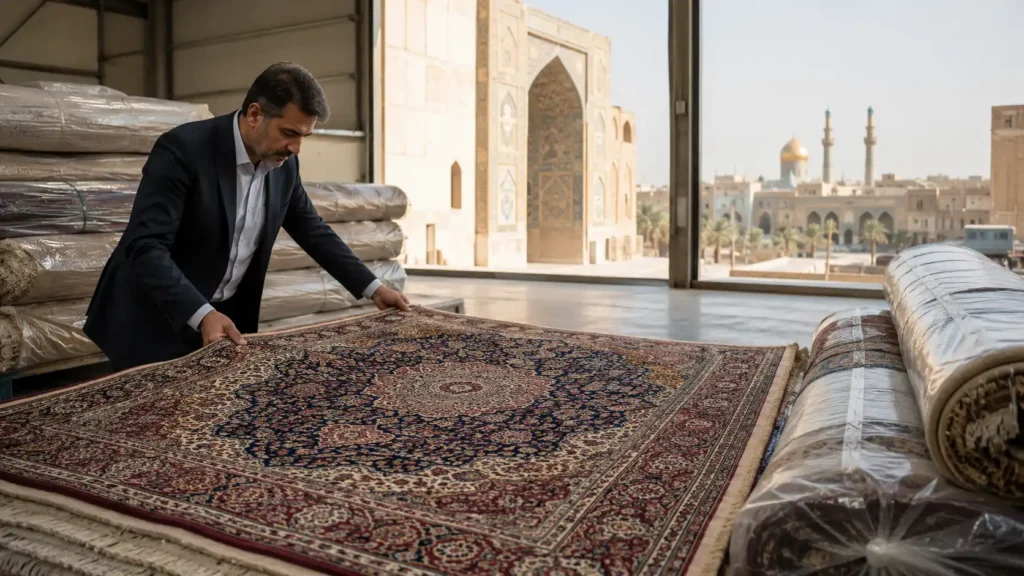
The Iraq carpet export market has become one of the most strategic and consistently profitable destinations for machine made carpets produced in Iran. The growth of this market is not accidental or temporary; instead, it is shaped by a combination of cultural habits, purchasing behavior, demographic structure, climate, economic transitions, and a lack of domestic carpet manufacturing industry. Together, these factors create a long term, high demand market where Iranian suppliers have a clear competitive advantage in exporting to Iraq.
In Iraqi culture, carpets are not viewed merely as decorative items; they are a fundamental part of home identity and social prestige. A well furnished home is almost always associated with having several good quality carpets. As a result, demand remains stable year round, unlike European markets, which are influenced by seasonal cycles. Brands such as Sanobar Carpet, which have years of experience exporting to various Iraqi regions, have learned to adapt their collections to the specific taste, climate, and usage patterns of Iraqi buyers. In this article, we will provide a deep, structured, and analytical exploration of why the Iraq carpet export market remains one of the most attractive destinations for machine made carpet exports.
Iraq offers a rare combination of economic and cultural conditions that make it extremely attractive for machine made carpet exporters. At the top of the list is the fact that Iraq has no major domestic machine made carpet manufacturing industry. Unlike countries such as Turkey, Egypt, China, or Saudi Arabia, Iraq imports almost all its carpet needs. This keeps the Iraq carpet export market competition manageable and gives foreign suppliers, especially Iranian ones, a long term advantage.
Culturally, Iraq is far more similar to Iran than to other Arab states in terms of home furnishing habits. While Gulf countries have shifted toward flat flooring, marble, or vinyl, Iraqi homes still rely heavily on soft flooring—especially carpets that are thick, patterned, and visually rich. The psychological role of carpets in creating comfort, warmth, and hospitality is deeply rooted in Iraqi families. This culturally driven demand makes the Iraqi carpet market far more stable than markets where carpet purchase is merely optional or decorative.
Another critical factor is geographical proximity. Exporting to Iraq involves some of the lowest logistics costs among all export destinations. Transportation from Iranian production hubs (Kashan, Mashhad, Isfahan) to border points such as Mehran, Shalamcheh, Bashmagh, and Khosravi is fast and inexpensive. This allows exporters to ship small or mid scale consignments without financial risk. Unlike Europe—where full container loads are often required—carpet shipments to Iraq are flexible even at lower volumes.
Iraq has a population of approximately 43 million people, and more than 65% of it is under the age of 35. This demographic factor alone explains a large part of the constant demand in the Iraqi carpet market. Young people getting married, establishing new families, and moving into new housing units naturally create an ever expanding need for home furnishing products—carpets being one of the first and most essential items in carpet exports to Iraq.
Urban development in major cities such as Baghdad, Basra, Erbil, and Najaf has increased significantly in recent years. Large housing projects, new apartment complexes, and expansions in suburban areas all contribute to regular carpet consumption. In many Iraqi regions, a newly married couple typically buys 3 to 6 carpets, making the demand structure for carpet shipments to Iraq consistent and predictable.
The Iraqi customer is highly tactile and visual. When shopping for carpets, buyers typically examine the surface shine, color harmony, softness, thickness, and pattern clarity before asking about brand or technical specifications. This is different from Western markets, where customers focus on durability labels or technical composition. For this reason, carpets with bright appearance, smooth texture, and elegant finishing tend to outperform others in the Iraq carpet export market.
Experience from exporters such as Sanobar Carpet also shows that Iraqi buyers often make decisions quickly once a carpet visually appeals to them. The preference is emotional and experiential rather than based on long comparisons or technical analysis, impacting carpet exports to Iraq.
One of the most important principles for succeeding in the Iraqi market is recognizing that tastes vary significantly from region to region. Iraq cannot be treated as a single homogenous market; instead, it consists of multiple cultural zones with unique expectations.
Southern and Central Iraq: Traditional & Warm Designs
Cities such as Najaf, Karbala, Diwaniyah, Nasiriyah, and Hilla tend to prefer traditional Iranian motifs. Designs with floral patterns, medallions, Kashan‑style layouts, and warm color palettes (cream, beige, coffee, maroon) dominate sales. Carpets used in these regions must also withstand high temperatures, as summers can exceed 48°C. Thick, durable yarns, low‑shedding fibers, and warm color harmony perform best here.
Kurdistan Region: Modern, Bright, and Minimalist Preferences
In Erbil, Sulaymaniyah, and Duhok, customers prefer modern, contemporary, and sometimes European‑inspired designs. Cool tones such as gray, silver, ice blue, cream‑white, and taupe are extremely popular. Texture shine is especially critical; carpets with silk‑like appearance, relief designs, or glossy fibers tend to sell quickly. Iraqi Kurdish customers follow global interior design trends more closely, so exporters must regularly refresh their collections.
By understanding these regional differences, brands like Sanobar Carpet can segment their designs and avoid offering the same product line to all Iraqi cities, which significantly increases success rates in the Iraq carpet export market.
The southern provinces are highly price sensitive. The best selling categories in the Iraqi carpet market include:
Families in these regions often purchase multiple carpets for large living areas, so affordability combined with visual richness is the key driver for carpet exports to Iraq.
In larger and more affluent urban markets, buyers expect visual luxury, refined colors, and detailed patterns. Best selling categories in the Iraq carpet export market include:
These cities appreciate elegance and visual sophistication, and this is where high-quality exporters such as Sanobar Carpet maintain a competitive edge in exporting to Iraq.
Shipping costs to Iraq are among the lowest for Iranian exporters. This dramatically increases profit potential and makes even small carpet shipments to Iraq financially viable.
Carpets in Iraq are not seasonal goods. Weddings, relocations, new housing units, and cultural norms ensure demand remains steady throughout the year in the Iraqi carpet market.
Because Iraq relies completely on imports, carpet exporters face less competition and enjoy long-term market stability in the Iraq carpet export market.
From budget segments to luxury buyers, every price tier has its own consistent demand base.
While exporting to Iraq provides huge opportunities, there are real challenges carpet exporters must understand:
Export experience from companies like Sanobar Carpet shows that most challenges in the Iraq carpet export market can be mitigated by selecting the right product for each city and ensuring professional logistics.
Turkey
Strong in modern designs, luxurious packaging, and aggressive branding.
China
Competes primarily through extremely low prices in carpet exports to Iraq.
Iran
Dominates the Iraq carpet export market through:
Despite competition, Iranian carpets remain the preferred choice due to their cultural proximity and reputation for lasting performance in the Iraqi carpet market.
Pricing in the Iraq carpet export market includes several layers:
Retail margins in Iraq are often significantly higher than in Iran, enabling carpet exporters to maintain healthy profit margins.
Packaging quality strongly affects customer perception in Iraq. A carpet that arrives with wrinkled or torn packaging is considered low value, regardless of its actual quality. Carpet exporters must ensure:
Professional exporters (such as Sanobar Carpet) often use customized thick packaging to prevent heat or handling damage during carpet shipments to Iraq.
Successful entry strategies for the Iraq carpet export market include:
Different strategies work for different product categories, and a hybrid approach is often most effective for exporting to Iraq.
Premium Markets for Carpet Exports to Iraq
Economic, High-Volume Markets for Carpet Shipments to Iraq
Demand patterns differ strongly across these cities, and carpet exporters must align their product mix accordingly.
Iraq remains one of the strongest, most stable, and most profitable export destinations for machine made carpets. Constant demand, cultural alignment, purchasing behavior, lack of local competitors, and low shipping costs create a uniquely favorable environment for Iranian manufacturers in the Iraq carpet export market. Companies like Sanobar Carpet, with their years of market presence and understanding of regional taste differences, demonstrate that strategic product selection and consistent quality can turn the Iraqi carpet market into a long-term, sustainable revenue channel for carpet exporters.
To access the complete catalog of Iraq focused carpet designs, export pricing, and shipment schedules, you may contact the Sanobar Carpet Export Department for exporting to Iraq.
