
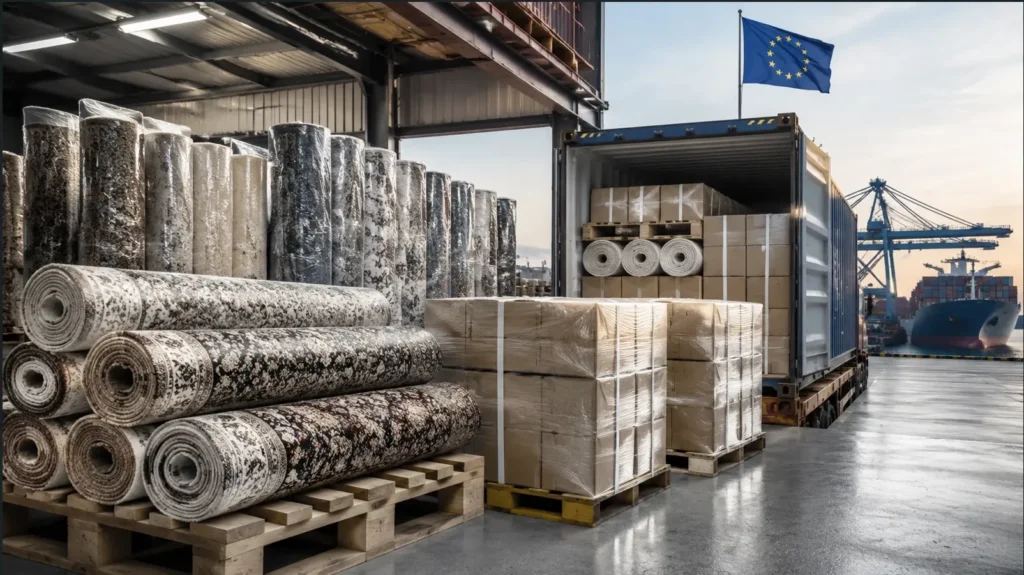
The machine-made carpet market in Europe is considered one of the most important and competitive sectors in the global flooring and interior decoration industry. Over the past decades, changing lifestyles, urbanization, growing interest in home décor, and increased attention to interior comfort have significantly boosted the demand for carpets across Europe. Among different types of floor coverings, machine-made carpets have gained a strong position thanks to their affordability, wide variety of designs, mass production capability, and practical maintenance features.
Today, European consumers are not only looking for beautiful carpets but also products that combine durability, comfort, sustainability, and modern aesthetics. This has created a highly dynamic market where manufacturers from countries such as Turkey, Belgium, India, China, and Iran compete intensely to supply retailers, wholesalers, and online marketplaces throughout Europe.
For carpet manufacturers and exporters, understanding the structure of the European market is essential. Consumer behavior, design trends, import regulations, environmental standards, logistics, and digital sales channels all play a critical role in determining success in this region. Companies that can adapt their products to European preferences while maintaining competitive pricing and high quality have strong opportunities for growth.
In this article, we will explore the European machine-made carpet market in detail, including its current trends, major importing countries, consumer expectations, export opportunities, and the challenges manufacturers may face when entering this competitive market.
Understanding the dynamics of the machine-made carpet market in Europe helps exporters tailor their products to local demand.
Europe represents one of the largest consumer markets for home furnishing and flooring products in the world. Carpets remain an essential element of interior decoration in many European households because they provide warmth, comfort, acoustic insulation, and visual appeal.
Unlike some regions where carpets are considered luxury items, in many European countries carpets are part of everyday living spaces. They are commonly used in:
The commercial sector alone creates substantial demand for durable and easy-to-maintain carpets, especially in hospitality and office environments.
Another important factor is the European consumer mindset. Buyers in Europe generally pay close attention to:
As a result, manufacturers entering this market must go beyond low pricing strategies and focus on delivering products that meet strict European expectations.
The European flooring and carpet industry generates billions of euros annually, with machine-made carpets accounting for a major share of the market. According to reports from market research platforms such as Statista and European flooring industry associations, demand for modern and functional carpets continues to grow steadily.
Several key trends are currently shaping the European carpet market.
European consumers increasingly prefer modern, minimalist, and contemporary carpet styles over heavily traditional designs. Neutral colors, geometric patterns, textured surfaces, and Scandinavian-inspired aesthetics are becoming more popular in both residential and commercial interiors.
One of the biggest transformations in recent years has been the rapid growth of e-commerce. Consumers now purchase carpets through online platforms more than ever before. Websites such as Amazon, Wayfair, IKEA, and specialized interior decoration stores have expanded access to international carpet suppliers.
Online shopping has changed buyer expectations as well. Customers now expect:
This trend creates major opportunities for exporters who can establish a strong digital presence.
Environmental awareness is growing rapidly across Europe. Many consumers actively seek products made from recyclable or sustainable materials. Carpet manufacturers that use eco-friendly fibers, low-emission production methods, and environmentally responsible packaging can gain a competitive advantage.
Various regions contribute to the overall machine-made carpet market in Europe.
Germany is one of the largest carpet markets in Europe due to its strong economy and high consumer purchasing power. German buyers generally prefer high-quality products with long durability and practical functionality. Minimalist and modern carpet designs perform particularly well in this market.
German consumers also pay close attention to product certifications and environmental compliance, making quality assurance extremely important.
The French market is heavily influenced by aesthetics and interior design trends. Consumers in France often look for stylish carpets that add character and sophistication to living spaces. Modern artistic patterns and premium-looking textures are especially popular.
The UK has traditionally been one of Europe’s strongest carpet markets. Carpets remain highly common in British homes, especially in bedrooms and living areas. Online carpet shopping has expanded significantly in the UK, creating opportunities for international manufacturers to reach customers directly.
These countries are not only important consumer markets but also major trading and distribution hubs for flooring products across Europe. Many imported carpets enter Europe through logistics centers located in Belgium and the Netherlands.
Countries such as Sweden, Denmark, and Norway favor clean and simple interior styles. Scandinavian consumers often choose carpets with:
Functionality and design harmony are extremely important in these markets.
Understanding consumer preferences is one of the most important aspects of succeeding in Europe’s carpet industry.
European consumers usually prefer carpets that complement modern interior styles. Neutral shades such as:
are widely used because they fit easily into contemporary homes.
Durability is another major purchasing factor. Customers expect carpets to withstand daily foot traffic, maintain their appearance over time, and resist wear and tear.
Manufacturers that invest in advanced weaving technologies and high-quality yarns often gain stronger customer trust.
Modern consumers value convenience. Stain-resistant, washable, and easy-to-clean carpets are increasingly attractive, especially for families with children or pets.
Synthetic fibers such as:
are commonly used in machine-made carpets because they offer durability, affordability, and easy maintenance.
Exporters aiming to succeed in the machine-made carpet market in Europe must prioritize digital visibility.
Many European consumers want carpets that look premium without extremely high prices. Machine-made carpets can successfully fill this gap by offering elegant designs at competitive prices.
Digital marketplaces have made it easier than ever for manufacturers to access European buyers. Exporters can cooperate with online retailers or create direct-to-consumer strategies through their own websites.
Many European brands outsource production to international manufacturers. This creates opportunities for carpet producers to supply products under European private labels.
Interior design trends change frequently in Europe, creating constant demand for new collections and fresh designs. Manufacturers capable of rapidly adapting to trends can remain competitive.
Competition in Europe is extremely strong. Turkey, Belgium, India, and China are among the leading suppliers of machine-made carpets to European countries. Competing successfully requires a combination of:
The European Union enforces strict product regulations related to:
Manufacturers often need to comply with regulations such as REACH and other textile safety standards before exporting products to Europe.
Transportation expenses can significantly impact profit margins. Rising freight costs, customs procedures, and delivery times are all important considerations for exporters.
European countries do not share identical tastes. Designs that perform well in Germany may not necessarily appeal to Scandinavian consumers or French buyers. Market-specific product adaptation is often necessary.
Design plays a critical role in determining success in the European market. Consumers increasingly view carpets as decorative elements rather than simple floor coverings.
Popular interior design styles in Europe include:
Manufacturers who follow international interior design trends and develop collections accordingly have a stronger chance of attracting European buyers.
Collaborating with professional designers and continuously updating product collections can help exporters remain relevant in this fast-changing market.
Companies aiming to expand into Europe should develop a clear export strategy.
Some effective approaches include:
Trade exhibitions such as Domotex Hannover are among the most important global events for the carpet and flooring industry. These exhibitions allow manufacturers to connect directly with wholesalers, retailers, and interior design professionals.
Strong online branding is equally important today. A professional website with high-quality content can significantly increase visibility in Google search results and attract international buyers.
The future of the European machine-made carpet market appears promising. Demand for stylish, affordable, and functional carpets is expected to continue growing as consumers invest more in interior comfort and home aesthetics.
At the same time, several factors will shape the future of the industry:
Manufacturers that can combine modern design, competitive pricing, environmental responsibility, and consistent quality will have the best opportunities for long-term success in Europe.
Europe remains one of the world’s most valuable and competitive markets for machine-made carpets. Rising demand for modern interior decoration, the expansion of e-commerce, and changing consumer lifestyles continue to create strong opportunities for exporters and manufacturers.
However, success in this market requires much more than simply offering low prices. Companies must understand consumer preferences, comply with European standards, invest in design innovation, and develop professional export strategies.
Manufacturers that focus on quality, modern aesthetics, sustainability, and digital visibility can establish a strong presence in the European carpet industry and build long-term international growth.
In summary, understanding the machine-made carpet market in Europe is the first step for any manufacturer looking for international success.
Contact Sanobar Carpet today to explore premium export-quality machine-made carpets for the European market.
