
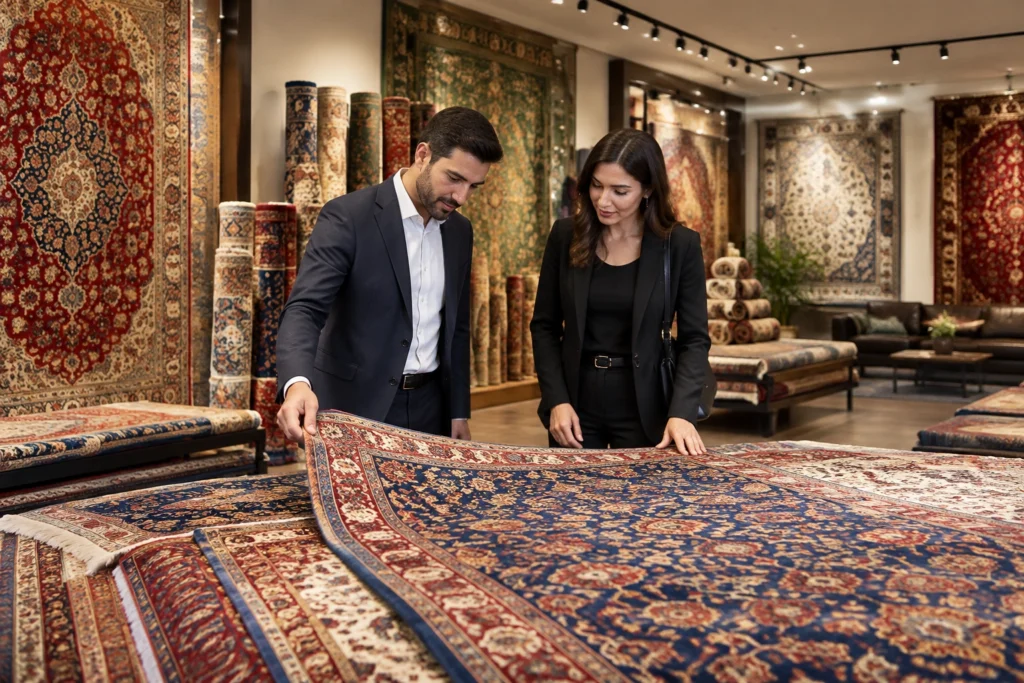
Understanding Middle East carpet color trends is one of the most critical decision-making factors in the international machine-made carpet trade. The markets across the Persian Gulf and the Levant are sophisticated, design-conscious, and maintain high-quality standards. In this region, a carpet is far more than a functional floor covering; it is a symbol of social status, hospitality, wealth, and the authenticity of interior architecture. For exporters, traders, and designers aiming to penetrate this competitive market, a precise grasp of regional color preferences and evolving consumer tastes is the first step toward securing a stable market share. This comprehensive guide, prepared by the R&D and strategy team at Senobar Carpet, explores color psychology, climatic influences, comparative analysis, and technical production solutions.
Interior architecture in the most opulent homes, villas, and commercial projects across the Middle East is often defined by spacious layouts, soaring ceilings, and dramatic lighting. In such environments, the carpet acts as a “visual anchor,” dictating the aesthetic harmony of all other design elements.
In traditional and high-end projects—particularly in countries such as Saudi Arabia, Kuwait, and Qatar—clients often gravitate toward colors that evoke grandeur and historical legacy:
In recent years, interior design in cities like Dubai, Abu Dhabi, and Doha has undergone a significant transformation. International designers and a new generation of Arab buyers are leaning toward “Modern Luxury.” In this shift, Middle East carpet color trends have moved away from intense, saturated colors toward richer, more sophisticated neutral spectrums:
To better understand how to leverage Middle East carpet color trends, one must recognize how rugs are applied in diverse settings. For instance, in a classic villa project in Muscat (Oman), designers typically select carpets with vibrant colors and high contrast (such as Navy and Gold) to serve as the Focus Point, highlighting the luxury of the space.
Conversely, in a modern luxury apartment in Dubai’s skyscrapers, the design strategy is starkly different. Here, designers eschew intense colors in favor of neutrals like grey and beige with Ghost Patterns. The goal is not for the carpet to stand out, but rather to act as a cohesive foundation that bridges the modern furniture, drapes, and architecture. This contrast illustrates that successful exports depend on understanding that carpet color is no longer purchased in isolation—it must be curated to suit the architectural style of the building.
Experienced exporters are acutely aware of the regional and climatic nuances within the Arab world:
Analyzing Middle East carpet color trends is not merely an aesthetic exercise; it also involves critical technical requirements. The Middle Eastern climate—characterized by high temperatures and direct sunlight—is a rigorous test for any textile. Senobar Carpet utilizes advanced heat-set technology and professional-grade dyeing processes to ensure:
As a pioneer of the carpet industry in Kashan, Senobar Carpet has tailored its production structure to meet the evolving demands of international markets:
If you are planning to source carpets for the Middle East market, consider these key steps to mitigate risk:
Mastering the nuances of Middle East carpet color trends is the key to creating a sustainable competitive advantage for traders and exporters. Today’s Middle Eastern market is a fusion of deep-rooted respect for tradition and an eager embrace of modernity. Senobar Carpet, with its technical expertise, premium materials, and commitment to customization, stands ready as your reliable business partner.
For professional export consultation, inquiries regarding custom orders, or to request our latest color catalogs, please contact the Senobar Carpet international trade department.
