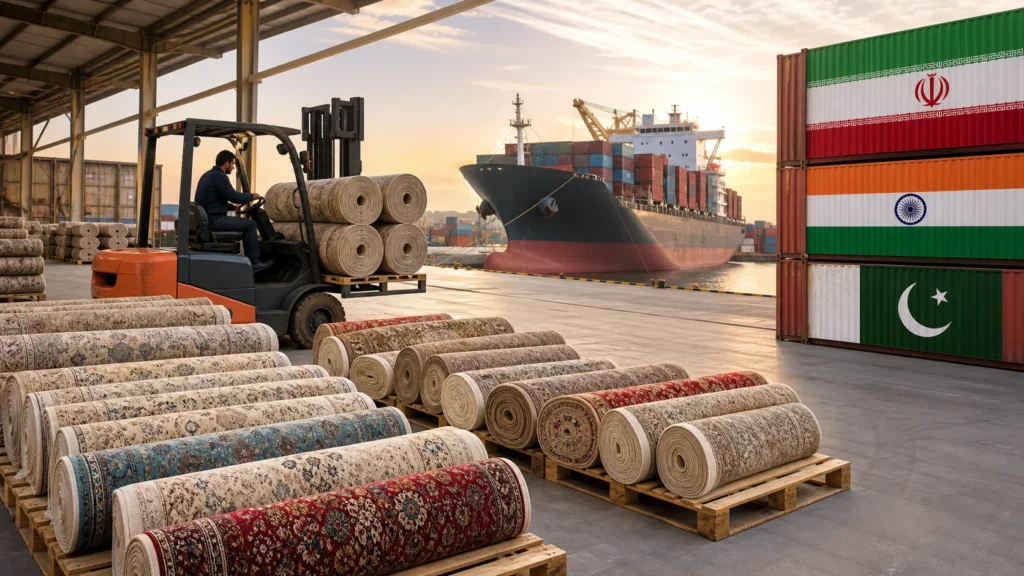
The carpet industry, particularly the machine-made segment, has historically been one of Iran’s most valuable export sectors. Among numerous destination markets, India and Pakistan offer exceptional potential for exporting carpets to India and Pakistan due to their geographical proximity, vast populations, and rich carpet-oriented cultures. Despite sharing cultural affinities, these two massive markets present unique challenges and opportunities. Understanding these dynamics is critical for commercial success. With a strategic focus on these territories, Senobar Carpet Company has formulated a comprehensive approach to enter and establish a solid presence in these markets.
Part 1: Analyzing the Indian Carpet Market – Opportunities & Challenges
With a population exceeding 1.4 billion and a culture deeply rooted in craftsmanship, India stands as one of the largest prospective markets for carpets. Navigating the dynamics of the Indian market is essential for any exporter aiming at exporting carpets to India and Pakistan.
Key Opportunities in India:
- A Growing Middle-Class Segment: The expanding Indian middle class, coupled with rising purchasing power, has fueled demand for luxury and decorative goods like carpets. This demographic actively seeks aesthetics, quality, and authenticity in home furnishings.
- Diverse Preferences: Cultural and regional diversity in India translates to varied preferences in carpet designs and color palettes. This presents a major opportunity for exporters capable of supplying diverse styles, ranging from traditional to modern.
- Hospitality Sector & Real Estate Projects: The rapid growth of India’s hospitality sector, alongside new residential and commercial developments, generates bulk demands for high-quality carpets. This sector is highly lucrative for B2B contract agreements.
- Demand for Premium Machine-Made Carpets: Alongside traditional hand-knotted rugs, the demand for premium machine-made carpets with appealing designs is surging. They offer an affordable alternative while maintaining excellent durability and aesthetic appeal.
Key Challenges in India:
- Fierce Local Competition: India is itself a major global producer of both handmade and machine-woven carpets. Competing with local manufacturers, particularly in low-end, budget-friendly segments, remains challenging.
- Import Regulations and Tariffs: Customs duties, tax structures, and import laws in India can fluctuate, significantly impacting the landed cost. Understanding and navigating these import regulations and customs standards is crucial.
- Logistics and Distribution: India’s vast geography and fragmented logistics infrastructure in certain regions can pose challenges in inland transportation and distribution.
- Cultural Adaptation: The designs, colors, and dimensions of the carpets must align closely with the local preferences of Indian consumers.
Part 2: Analyzing the Pakistani Carpet Market – Opportunities & Challenges
Like India, Pakistan represents a massive market with significant potential in the carpet trade. The country’s long history in carpet weaving makes its consumers highly knowledgeable and appreciative of the art.
Key Opportunities in Pakistan:
- Rich Carpet Culture: Pakistani consumers have a long-standing appreciation for carpet weaving, placing high value on quality and authentic designs. This cultural affinity facilitates the acceptance of premium Iranian carpets.
- Strong Demand for Traditional and Classical Motifs: There is a robust demand for classical Persian designs and traditional patterns in Pakistan, which plays directly into the strengths of Iranian exporters.
- B2B Commercial and Residential Projects: Similar to India, Pakistan is witnessing growth in commercial and housing developments, driving the need for premium carpeting solutions.
- Regional Cooperation & Proximity: Geographical closeness and established cross-border trade links facilitate logistical operations and streamline the export process.
Key Challenges in Pakistan:
- Domestic Production Capabilities: Pakistan maintains a strong presence in the handmade and machine-made rug industry, presenting direct local competition.
- Economic and Currency Fluctuations: Economic instability and exchange rate volatility in Pakistan can impact the purchasing power and decision-making process of local distributors.
- Import Formalities: The administrative processes and import policies in Pakistan require careful analysis. Ensuring compliance requires having a clear understanding of the necessary business export licensing and documentation.
- Accessing Distribution Channels: Finding reliable trade partners and establishing efficient distribution networks in Pakistan demands thorough local market research.
Part 3: Senobar Carpet’s Operational Strategy for Market Penetration
To achieve sustainable success in exporting carpets to India and Pakistan, Senobar Carpet has adopted a multi-faceted B2B strategy:
- Focus on Premium Quality and Distinctive Designs: Rather than competing in the low-cost price war, the company focuses on manufacturing high-end machine-made carpets featuring authentic Persian motifs (both traditional and contemporary) using premium raw materials. This differentiation helps capture clients looking for premium value.
- Market Research and Customization: Continuous market analysis is conducted to understand regional color trends, size requirements, and interior design preferences in both India and Pakistan. This data guides the production of tailored collections.
- Building Robust B2B Networks: Establishing direct relations with major importers, interior design firms, hotel procurement managers, and real estate developers in key commercial hubs—such as Delhi, Mumbai, and Bangalore in India, and Karachi, Lahore, and Islamabad in Pakistan. Participating in regional trade exhibitions is also a priority.
- Optimizing Logistics & Supply Chain: Partnering with reputable international shipping lines and customs brokers who specialize in South Asian trade routes to ensure timely and cost-effective deliveries. We also evaluate the feasibility of regional warehousing to address export logistics and distribution challenges.
- Technical and Commercial Support: Providing comprehensive technical specifications (fiber type, density, weight, maintenance guides) and offering administrative assistance to facilitate smooth import customs clearance and payment terms.
Part 4: Conclusion and Next Steps
Exporting carpets to India and Pakistan represents a lucrative milestone in expanding the global footprint of Senobar Carpet. By deeply understanding the opportunities and structural challenges of these two major markets and deploying focused strategies, Iranian machine-made carpets can secure a dominant and profitable position in the region.
Senobar Carpet is fully prepared to establish long-term, mutually beneficial partnerships with importers, wholesalers, and interior design professionals in India and Pakistan. To receive our latest product catalogs, request price quotations, or discuss dealership opportunities, please contact our export experts through our official website. Our dedicated support team is ready to guide you through every step of importing premium carpets.