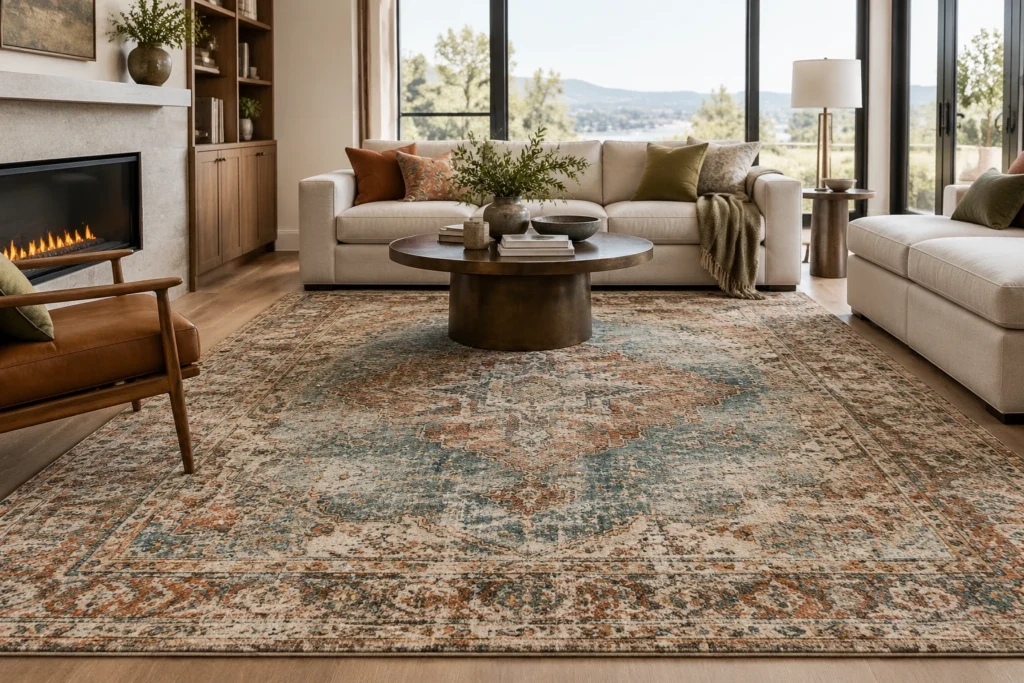
Introduction and the Significance of the Issue in Humid Regions
Living and operating in geographical climates with high relative humidity—such as coastal regions along the Caspian Sea, the Persian Gulf and Sea of Oman coastal belts, southern islands, and other high-rainfall zones—presents distinct engineering and decorative challenges. In these regions, atmospheric humidity often exceeds 65% to 80% for most of the year. Saturated atmospheric moisture in residential, commercial, and office spaces easily penetrates deep into the weave of textiles, curtains, upholstered furniture, and particularly floor coverings.
Because floor coverings and rugs are constantly adjacent to subfloors (ceramic tiles, stone, concrete, or hardwood), they act as focal points for ascending moisture accumulation and heavy, humid air.
If carpet selection is made solely based on aesthetic patterns, colors, or initial pricing while ignoring the technical and physical properties of the textile, undesirable consequences such as mold spore growth, gradual foundation decay, persistent musty odors, and even respiratory irritation among occupants will inevitably occur.
From this standpoint, accessing a practical, rigorous guide to selecting the best carpets for humid climates holds strategic importance for homeowners, interior designers, and wholesale buyers. In this article, we provide an in-depth analysis of structural characteristics, the mechanical and chemical behavior of various fibers, the role of backing latex and sizing, and specialized maintenance techniques for rugs in coastal conditions.
Physical and Chemical Risks Posed by Moisture to Carpet Structures
To understand the necessity for specialized textiles in humid environments, we must first examine how ambient moisture damages the components of a standard carpet. Recognizing these phenomena clarifies the essential need to choose the best carpets for humid climates:
- Biological Degradation, Mildew, and Mold Formation: Mold spores are suspended in all indoor environments; however, they require relative humidity above 50% and moderate temperatures to germinate and form active colonies. Failing to select the best carpets for humid climates allows pile fibers and knot cores to become breeding grounds for mold, mildew, and dust mites, which—alongside unpleasant odors—serve as primary triggers for allergies and respiratory conditions in coastal areas.
- Rotting of Foundation Yarn: Warp and weft yarns are responsible for structural integrity and knot stability. When these base yarns are woven from materials with high moisture absorption, moisture trapped in the lower layers of the carpet triggers hydrolytic degradation, resulting in structural weakening, fiber rot, and foundation tearing.
- Dimensional Instability and Buckling: The continuous absorption and release of ambient moisture by water-sensitive fibers causes longitudinal expansion and transverse contraction of yarns, leading to visible rippling, surface buckling, and edge curling.
- Cellulosic Browning and Color Migration: Prolonged moisture in coastal atmospheres severely slows drying times, leading to dye bleeding in lower-grade colorants, yellowing (cellulosic browning) of white cotton fringes, and surface oxidation across the pile face.
Specialized Fiber Analysis: Which Yarn Resists Moisture Best?
The face pile constitutes more than 80% of a carpet’s total weight and volume, acting as the primary frontline against atmospheric humidity. The performance of common industry fibers is detailed below:
1. Heat-set Polypropylene (BCF / Polypropylene)
Polypropylene is the premier fiber regarding hydrodynamic resistance against humidity. This synthetic fiber features a moisture absorption rate close to zero (less than 0.05%).
- Advantages: Completely immune to mold, mildew, and bacterial growth; liquid stains do not penetrate the fiber core; dries exceptionally fast after washing; delivers outstanding performance in coastal zones and semi-covered outdoor spaces.
- Technical Strengths: Due to its inherent hydrophobic nature, polypropylene is universally recognized as a cornerstone material in producing the best carpets for humid climates.
2. Polyester and Micro-Polyester Fibers
Polyester is an engineered fiber offering high moisture resistance and notable visual luster, widely utilized in modern and vintage rug collections.
- Advantages: Negligible moisture regain (around 0.4%); superior stain-repellent characteristics; remarkable resistance to mildew; soft texture with virtually zero shedding.
- Application: Products crafted from durable polyester yarns provide an appealing, practical choice for living rooms and salons situated in damp climates.
3. Heat-set Acrylic with Engineered Finishing
Due to its visual and tactile resemblance to natural wool, high mechanical resilience, and resistance to foot traffic crushing, acrylic remains one of the most widely favored fibers in machine-woven rug manufacturing.
- Behavior Against Moisture: Acrylic features a moisture absorption rate of approximately 1% to 2%—substantially lower than natural wool—yet requires precise heat-setting processes and antibacterial finishing.
- Technical Conclusion: High-density acrylic carpets (such as 1200 and 1500 reeds), when manufactured with premium backing compounds, function effectively as the best carpets for humid climates while preserving classical aesthetics.
4. Evaluation of Natural Fibers (Wool and Cotton)
Natural fibers such as traditional wool and pure cotton possess strong hydrophilic properties, capable of absorbing up to 30% of their weight in moisture without feeling damp to the touch. Trapped moisture inside natural fibers does not evaporate easily in coastal weather, fostering a permanent environment for bacterial growth and fiber rot. Consequently, engineered synthetic fibers maintain clear technical superiority in wet regions.
Technical Specifications: Weave Density, Pile Height, and Sizing Systems
The pile fiber alone does not determine overall performance; loom engineering and finishing operations play an equally decisive role:
- Pile Height: In humid locations, rugs with dense yet low-to-medium pile heights (6 mm to 8 mm) should be prioritized. High-pile rugs (such as shag carpets) obstruct airflow and trap condensation and micro-droplets deep within the knot base.
- Reed and Weave Density: High density prevents humid air particles and airborne dust from penetrating freely into the carpet matrix, making routine surface maintenance straightforward.
- Warp and Weft Composition: In the best carpets for humid climates, foundation weft yarns should incorporate cotton-polyester blends or reinforced synthetic filaments to eliminate warp rotting risks.
- Backing Latex and Sizing Adhesives: The finishing and sizing chemistry is critical. Starch-based or low-grade adhesives break down in damp atmospheres, providing nourishment for mold cultures. Therefore, utilizing waterproof synthetic latex and anti-fungal resins is imperative.
Technical innovations across premier manufacturing plants—such as research-driven production standards at Senobar Carpet Factory—have enabled the formulation of specialized antibacterial backings and optimized weaving lines with modern synthetic yarns, delivering premium collections tailored for coastal residents and regional export markets.
Interior Decor and Placement Principles in Humid Climates
Indoor styling in high-humidity areas must strictly follow the principle of “facilitating unrestricted airflow”:
- Maintain Clearance from Damp Walls: Never place carpets flush against perimeter walls or structural pillars; maintain at least a 15 to 20 cm open margin around the rug perimeter to prevent moisture from becoming trapped beneath the edges, similar to foundational interior styling and airflow planning guidelines.
- Select Breathable, Porous Underlays: Avoid solid rubber pads or non-breathable foam underlays directly beneath the carpet; choose open-mesh, anti-fungal underlays that promote continuous air circulation.
- Avoid Flat, Legless Heavy Furniture: Refrain from placing flat-bottomed cabinets, base-heavy wooden furnishings without risers, or natural ceramic planters directly over the carpet surface, as drainage seepage from plant pots represents a primary cause of localized rot.
Comprehensive Guide to Washing and Professional Rug Care in Humid Regions
Even after acquiring the best carpets for humid climates, neglecting standard routine maintenance practices can cut the product’s lifespan in half:
- Indoor Relative Humidity Control: During peak humid seasons, keep windows and exterior doors closed and run cooling systems (air conditioners in dehumidification mode or dedicated dehumidifiers) to maintain indoor relative humidity below 50%.
- Dual-Stage High-Suction Vacuuming: Consistent, deep vacuuming removes particulate dust and microscopic debris before it can combine with atmospheric dampness to form stubborn soil.
- Strategic Airing on Dry, Sunny Days: On clear days when dry breezes and gentle sunlight are present, open interior spaces to create cross-ventilation, allowing accumulated core moisture to dissipate naturally.
- Strict Avoidance of Plastic Storage Wraps: If storage is required, never seal rugs inside non-breathable plastic sheets. Always utilize breathable fabric covers and pack silica gel moisture-absorbing packets alongside the rolled rug.
- Mechanized Washing with Controlled Drying Chambers: Traditional backyard washing in coastal climates creates extended dampness and foundation decay risks. Carpets must be cleaned in modern industrial washing facilities equipped with centrifugal water extractors and climate-controlled drying chambers.
The integration of advanced international quality standards across all collections by Senobar Carpet guarantees superior resistance against environmental wear, making these rugs a dependable, enduring investment for coastal homes.
Practical Checklist When Purchasing Carpets for Humid Climates
Before finalizing an order, review this practical technical checklist:
- Is the pile yarn constructed from hydrophobic synthetic fibers (polypropylene, polyester, or premium heat-set acrylic)?
- Are the warp and weft foundation yarns reinforced against moisture and hydrolytic decay?
- Does the carpet feature a balanced, compact pile height (low-to-medium) that facilitates deep air circulation?
- Has the manufacturer utilized certified anti-fungal sizing and water-resistant synthetic latex?
- Does the product documentation and technical warranty cover structural performance in humid and coastal conditions?
Final Conclusion
Selecting and purchasing the best carpets for humid climates is far more than a decorative preference—it is a technical decision grounded in textile chemistry and material science. By specifying hydrophobic fibers, controlled pile profiles, antibacterial backing systems, and disciplined airflow maintenance, homeowners and designers can enjoy long-lasting decorative elegance without the risks of mold colonization, musty odors, or premature structural deterioration.