
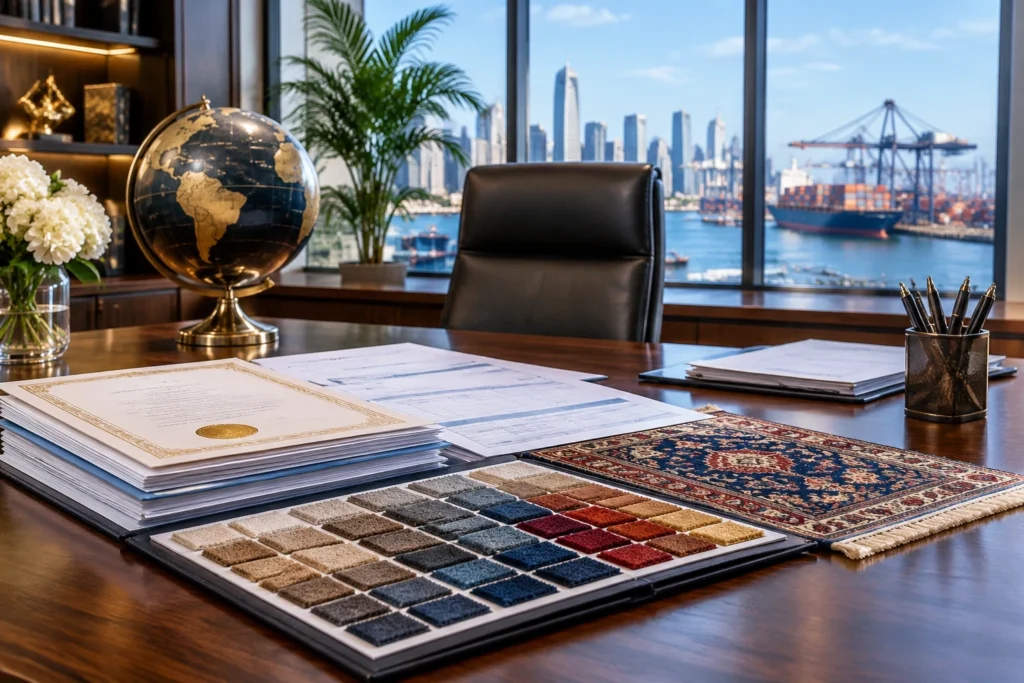
The textile sector and machine-made carpet manufacturing industry in Iran—driven by cutting-edge weaving technologies, premium fibers, and an extensive variety of designs and patterns—constitute a major portion of the country’s non-oil exports. However, achieving sustainable success across regional and global markets does not depend solely on production excellence or visual appeal; it requires international traders and exporters to possess comprehensive mastery over regulatory and customs procedures.
Throughout every stage of the international supply chain, compiling and validating business, customs, and financial paperwork is of paramount importance. A clear understanding of the documents required for machine-made carpet export allows exporters to prevent costly border delays, avoid penalty fees, and eliminate legal disputes with foreign buyers.
In this specialized guide, we examine all mandatory certificates, licenses, and documentation necessary for the smooth and compliant overseas shipping of machine-made carpets, enabling industry professionals to manage their trade operations with absolute confidence.
Exporting merchandise through official borders is a structured process built upon complete data transparency and documentary compliance. Customs authorities and regulatory agencies require standardized paperwork to verify product identity, calculate tariffs or duties, and monitor foreign currency repatriation.
Concurrently, foreign buyers require authentic certificates to handle import clearance at destination ports and process international banking settlements. Therefore, systematically preparing the documents required for machine-made carpet export establishes a secure bridge connecting the exporter, governmental authorities, and global clientele.
Before any carpet consignment reaches the clearance terminal, the registered trading entity or manufacturing enterprise must organize its core corporate credentials:
These documents govern the financial, legal, and operational agreement between seller and purchaser:
Once the cargo arrives at the departure customs terminal, specific administrative forms are essential to secure export clearance:
Depending on whether the machine-made carpet cargo travels by road, rail, sea, or air, dedicated freight documents are issued:
In alignment with national foreign exchange regulations, exporters must satisfy statutory foreign exchange commitment settlements. Required banking files include electronic export permits, currency repatriation clearance forms, and letters of credit (L/C) or bank guarantees when processing shipments through conventional interbank payment systems.
Rigorous documentation practices accelerate border processing and foster lasting trust among overseas distributors. Leading manufacturing units in the machine-made carpet sector, such as Senobar Carpet Factory, actively facilitate the gathering of documents required for machine-made carpet export by providing precise technical datasheets, full yarn traceability, and continuous support to trading partners.
Executing a seamless and profitable machine-made carpet export operation ultimately relies on precision, consistency, and strict compliance when preparing the documents required for machine-made carpet export. From business licenses and commercial invoices to packing lists, customs declarations, and transport bills, every single item serves as an interconnected link in global trade.
Given that compiling accurate documents required for machine-made carpet export safeguards companies against costly logistical errors, exporters who prioritize documentary precision and collaborate with certified production leaders will steadily expand their footprint in competitive foreign markets.
